A poetic, meditative, and visually atmospheric journey that blends astronomy, emotion, and spirituality into a single whispered reflection on the universe.
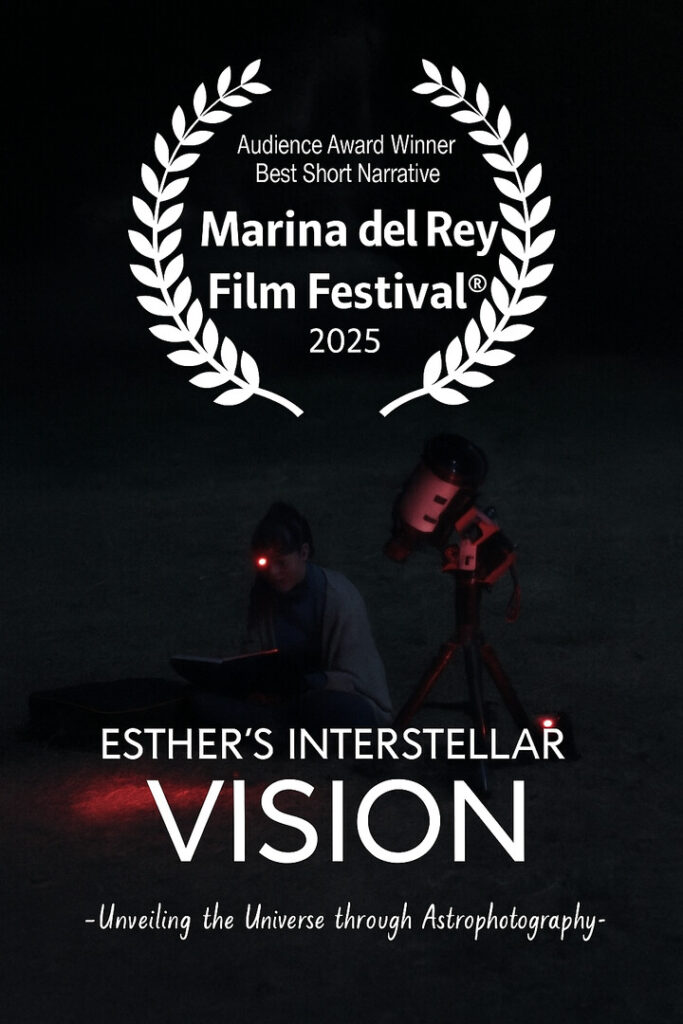
Esther’s Interstellar Vision, directed by Esther Angelica Ancrum, is an unconventional short that stands apart in the lineup—less a traditional sci-fi film and more a cosmic poem brought to life through image, voice, and mood. It leans fully into experimental storytelling, inviting the viewer into a quiet, contemplative state as a young woman wanders through nature with her telescope, reflecting on her place among the stars.
Judges responded with intrigue and appreciation for its uniqueness:
- Jake described it as “very poetic,” noting the hypnotic quality of the narrator’s voice and the visual aesthetic that feels influenced by AI, stock footage, or experimental montage work.
- Beth found it interesting and acknowledged the film is essentially a poem—beautifully delivered—while questioning how firmly it sits within sci-fi.
- Leonard appreciated the film’s vibe, describing it as a “Comose approach”—a reference to meditative, poetry-based films—and noting the educational feel and use of stock-style imagery.
- Ross viewed it positively as well, adding to the film’s overall warm reception.
A Film Driven by Emotion Over Plot
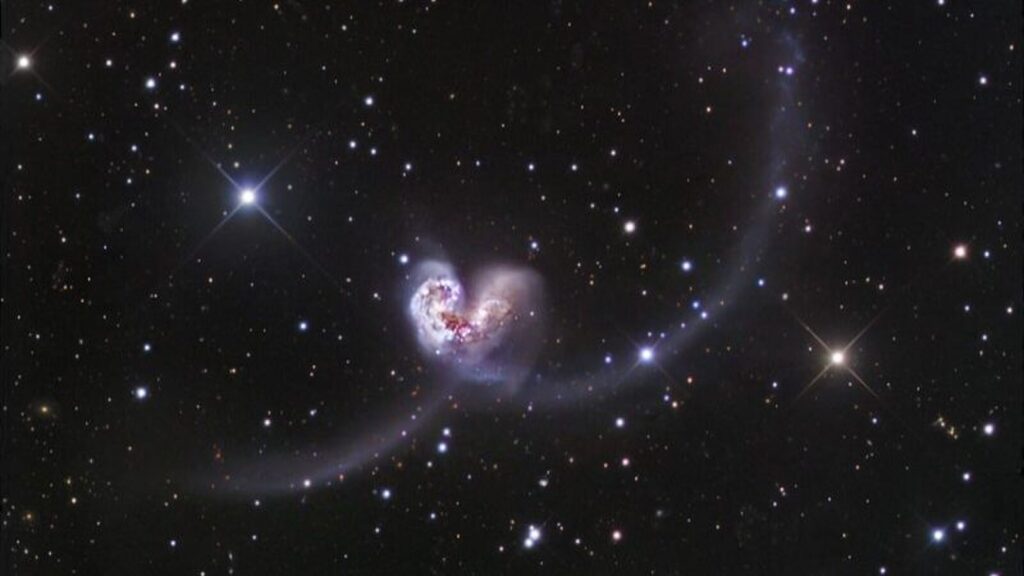
Instead of dialogue, narrative scenes, or traditional genre beats, the film offers pure visual storytelling paired with poetic monologue. A young woman explores the wilderness with her telescope, capturing celestial images as she reflects on love, connection, and the vastness of the cosmos. It’s more experiential than linear—designed to immerse the viewer in a quiet state of wonder rather than push them along a storyline.
A Director Rooted in Wonder, Faith, and Science
Esther Angelica Ancrum brings a unique artistic identity to the project:
- A DGA director, balancing faith-based messaging with scientific fascination
- Winner of the Audience Award for Best Short Narrative at the Marina del Rey Film Festival
- Professionally trained in Unreal Engine, LED volume production, and virtual cinematic techniques
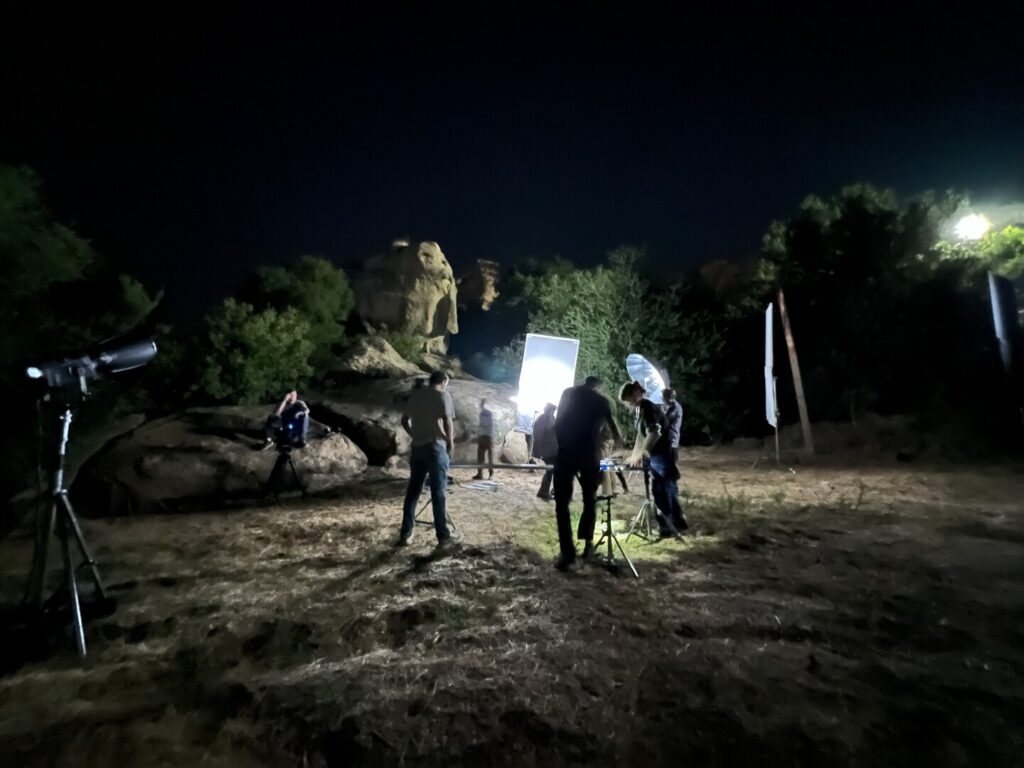
- Daughter of a longtime Hollywood set lighting technician who worked on films including Interstellar, which inspired the film’s title
Ancrum’s blend of personal history, astrophotography hobby, and cross-disciplinary training is felt throughout the short. Her father’s influence—his craft, his legacy, and her own childhood fascination with stars—anchors the film on an emotional level.
Themes: Love, Light, Faith, and the Universe
At its core, Esther’s Interstellar Vision is about:
- Finding light in darkness
- Understanding life through cosmic metaphor
- Love that reaches across distance
- A spiritual relationship with the universe
- The quiet comfort of solitary hobbies
The film incorporates real scientific elements, including the sonification of the Big Bang, grounding the poetic imagery with a sense of authenticity and reverence for astrophysics.
Artistic Impact
This short will resonate strongly with viewers who appreciate:
- Experimental cinema
- Poetic narration
- Slow, atmospheric pacing
- Spiritual or introspective themes
- Hybrid art that blends science, philosophy, and emotion
It is less about traditional storytelling and more about feeling—about experiencing a sense of cosmic intimacy and human smallness.
Final Thoughts
Esther’s Interstellar Vision is a gentle, poetic meditation—a film that prioritizes mood over plot and reflection over action. It offers viewers a moment of stillness, a doorway into both the universe and the inner life of its subject. Supported by strong narration, thoughtful imagery, and a deeply personal director’s vision, the short stands out as a meaningful piece of experimental filmmaking.
A cosmic poem brought to life—quiet, emotional, and beautifully reflective.

About the Author